Student LifeCurriculum

One foundation. Then a direction of one’s own.

From Grade V, students follow the CBSE curriculum, in English, on one campus. In Grades XI and XII they continue with CBSE or choose the IB Diploma Programme — and all of it is studied inside the life of a residential school.

Compare CBSE and IB Explore subjects

Grades
V to XII
Medium
English
Affiliation
CBSE, New Delhi
Grades XI–XII
CBSE or IB Diploma

Our approach

Broad for as long as it can be. Deep when it counts.

A student can join in Grade V and leave after Grade XII without changing schools: one faculty, one campus and one set of expectations, carried through eight years rather than handed from school to school.

The early years keep a broad course. Nothing is narrowed until it has to be; in Grade XI a student chooses what to study in depth, and the last two years are spent on it.

  1. Continuity

    Eight years on one campus, from the first year of the Junior School to the Class XII Board examination.

  2. Breadth, then depth

    A broad course to Grade X. Then a CBSE stream, or six IB subjects and the Diploma core.

  3. Values alongside

    The Chinmaya Vision Programme runs across every grade, beside the timetable rather than inside one lesson.

Grade journey

One route to Grade X, two beyond it.

Every student follows the CBSE curriculum from Grade V and sits the CBSE Board examination at the end of Grade X. The choice of pathway covers the final two years only.

  1. Grades V–VIII

    The foundation

    Science, Mathematics, English, two additional languages and artificial intelligence. Published Class X results list Hindi, Sanskrit, Tamil and French as language subjects; ask which options run in each grade.

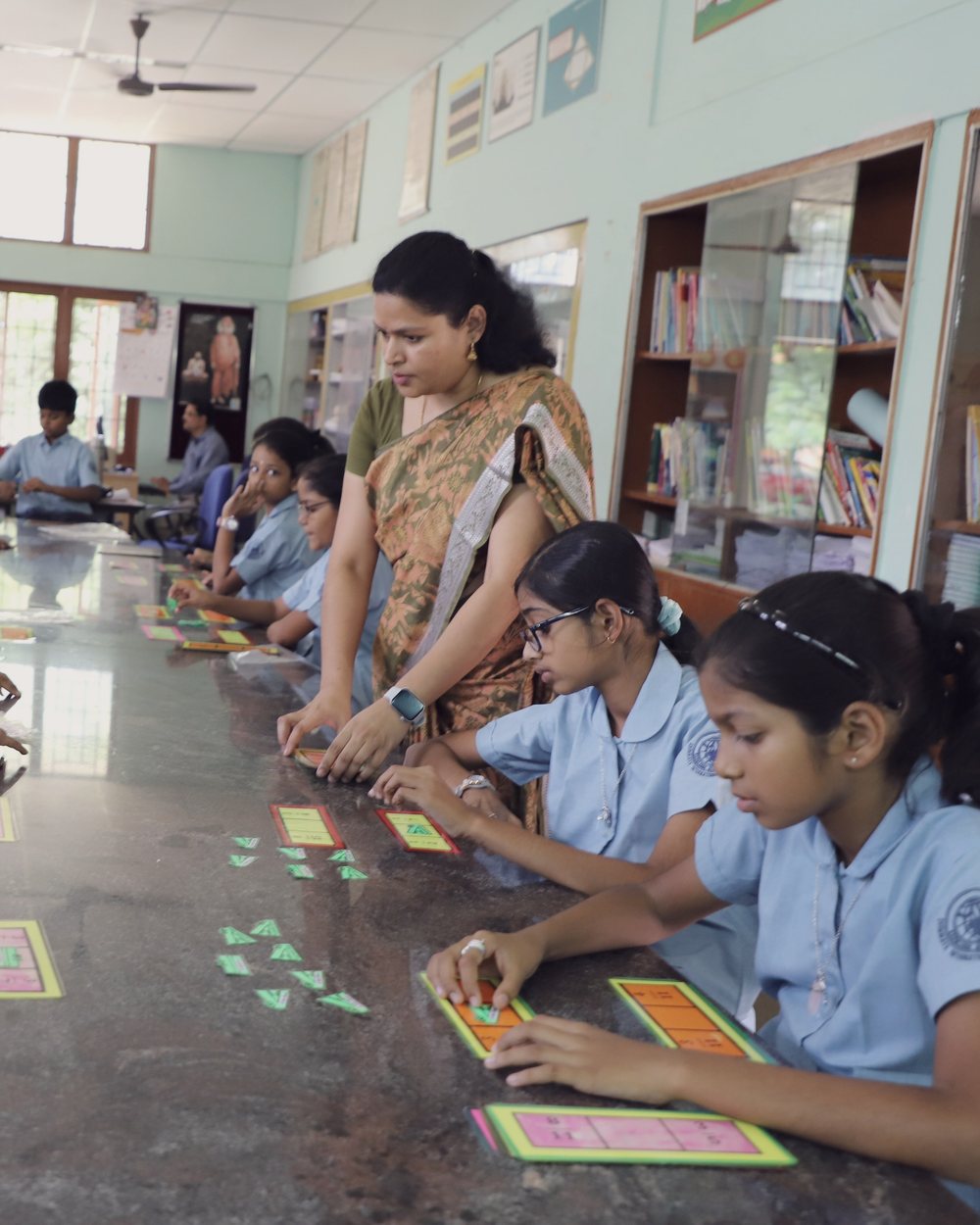
    Junior School students at a long classroom bench, working with coloured cards while their teacher looks on
  2. Grades IX–X

    The first Board year

    The same broad course, carried to the CBSE Board examination at the end of Grade X — the first external examination a CIRS student sits.

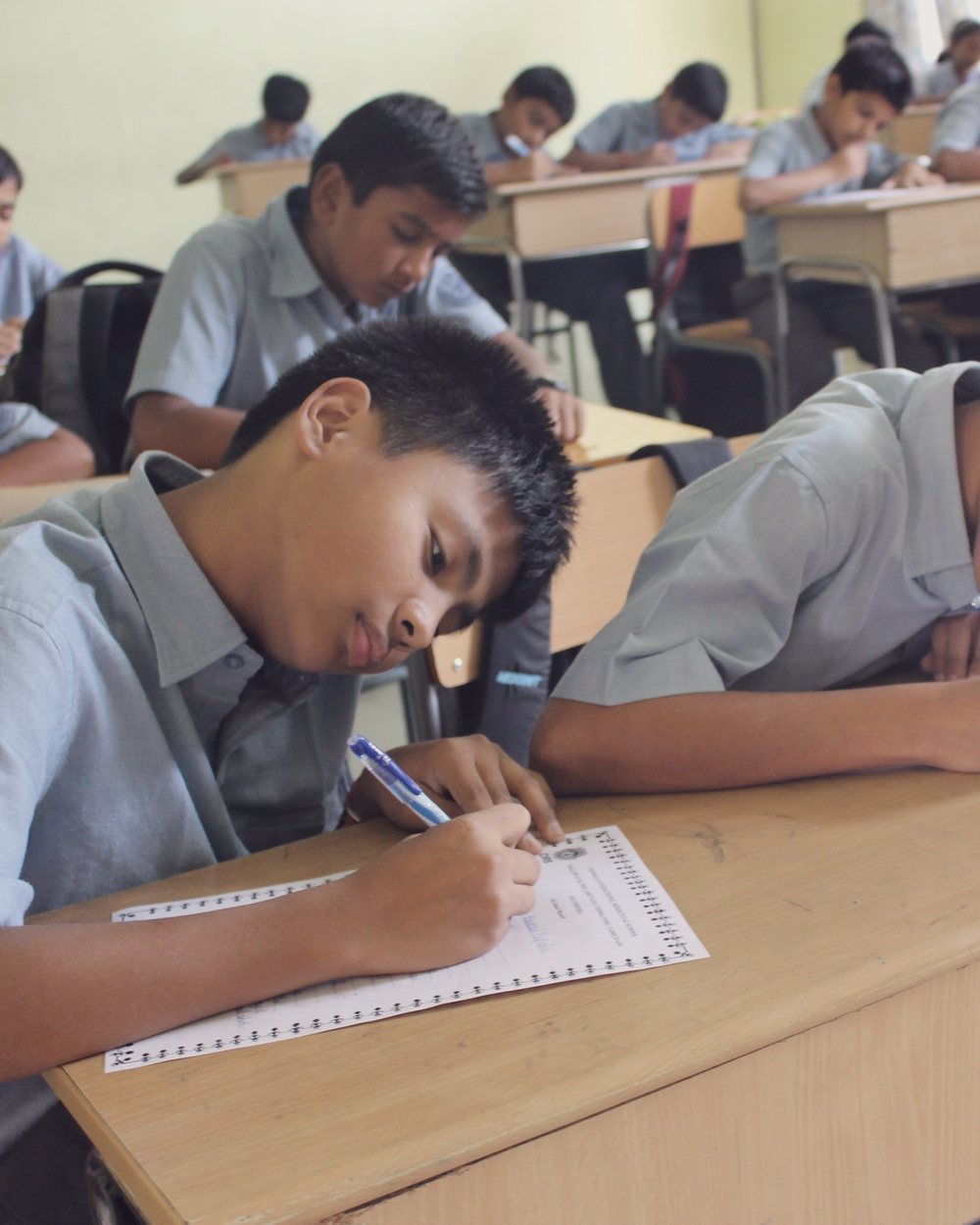
    Students writing at rows of classroom desks
  3. After Grade X · Grades XI–XII

    A choice of pathway

Pathways

Two pathways for Grades XI and XII.

Neither route is better in general: the right one depends on the subjects a student wants and the next step they have in mind.

Central Board of Secondary Education, New Delhi

CBSE

Grades V to XII at CIRS; streams in XI and XII

International Baccalaureate

IB Diploma Programme

Grades XI and XII

  1. Structure

    CBSE

    1 stream

    A stream (Engineering, Medicine or Management), each built on English and a set of core subjects, studied for two years.

    IB Diploma

    6 subjects and the core

    Six subjects from six groups, three or four at Higher Level, alongside the Diploma core: Theory of Knowledge, the Extended Essay and Creativity, Activity, Service.

  2. Subject choice

    CBSE

    1 of 3 streams

    Choose a stream. The stream sets the core subjects; electives are chosen alongside them.

    IB Diploma

    3–4 at Higher Level

    Choose one subject from each group, three or four at Higher Level and the rest at Standard Level.

  3. Assessment

    CBSE

    X & XII Board examinations

    CBSE Board examinations in Grades X and XII; the Class XII examination closes the senior stream.

    IB Diploma

    45 points in all

    Examinations at the end of Grade XII, with coursework assessed during the programme. Each subject is graded 1–7; Theory of Knowledge and the Extended Essay add up to 3 points, for 45 in all.

  4. At CIRS

    CBSE

    3 streams

    Engineering, Medicine and Management streams. Ask the school for this year’s electives.

    IB Diploma

    15 subjects in six groups

    Fifteen subjects across the six groups. A combination runs when enough students choose it.

Subjects

What students study in Grades XI and XII.

For this year’s subject combinations, levels and entry requirements, write to the school at info@cirschool.org.

CBSE

Three senior streams

Core subjects by stream, as the school last published them, for 2018–19. English is studied in all three.

  • Engineering

    • English
    • Physics
    • Chemistry
    • Mathematics
  • Medicine

    • English
    • Physics
    • Chemistry
    • Biology
  • Management

    • English
    • Business Studies
    • Accountancy
    • Economics

Electives and this year’s combinations: ask about CBSE subjects.
IB Diploma Programme

Fifteen subjects in six groups

The subjects and levels offered at CIRS. A combination runs when enough students choose it, so not every permitted combination is timetabled.

The IB’s rules, everywhere

  • Six subjects: one from each of Groups 1 to 5, and an arts subject or, in its place, an additional language, individuals and societies or sciences subject.
  • HL Higher Level goes further and deeper than SL Standard Level. Three or four subjects are taken at HL; both levels are graded 1–7.

At CIRS

  • Ask the school which substitutions for an arts subject your timetable allows, and about prerequisites.

Ask about IB subjects and levels

At the centre of the Diploma

The Diploma core

  1. Theory of Knowledge

    Students reflect on how knowledge is made and how we know what we claim to know.

  2. Extended Essay

    Students pursue an independent research question and develop an extended piece of academic writing.

  3. Creativity, Activity, Service

    Experiences across all three strands. Required for the Diploma, but it does not add points to the score.

School life

The timetable is only part of the day.

Academic work sits within the Chinmaya Vision Programme and the life of a residential school. Value education runs across every grade alongside the timetable: students study the Bhagavad Geeta and the CCMT Life — An Aradhana books, and spiritual classes and aartis carry that learning into the day.

Morning assembly, yoga, service, the arts and sport sit alongside classroom work.

Follow a day at CIRS

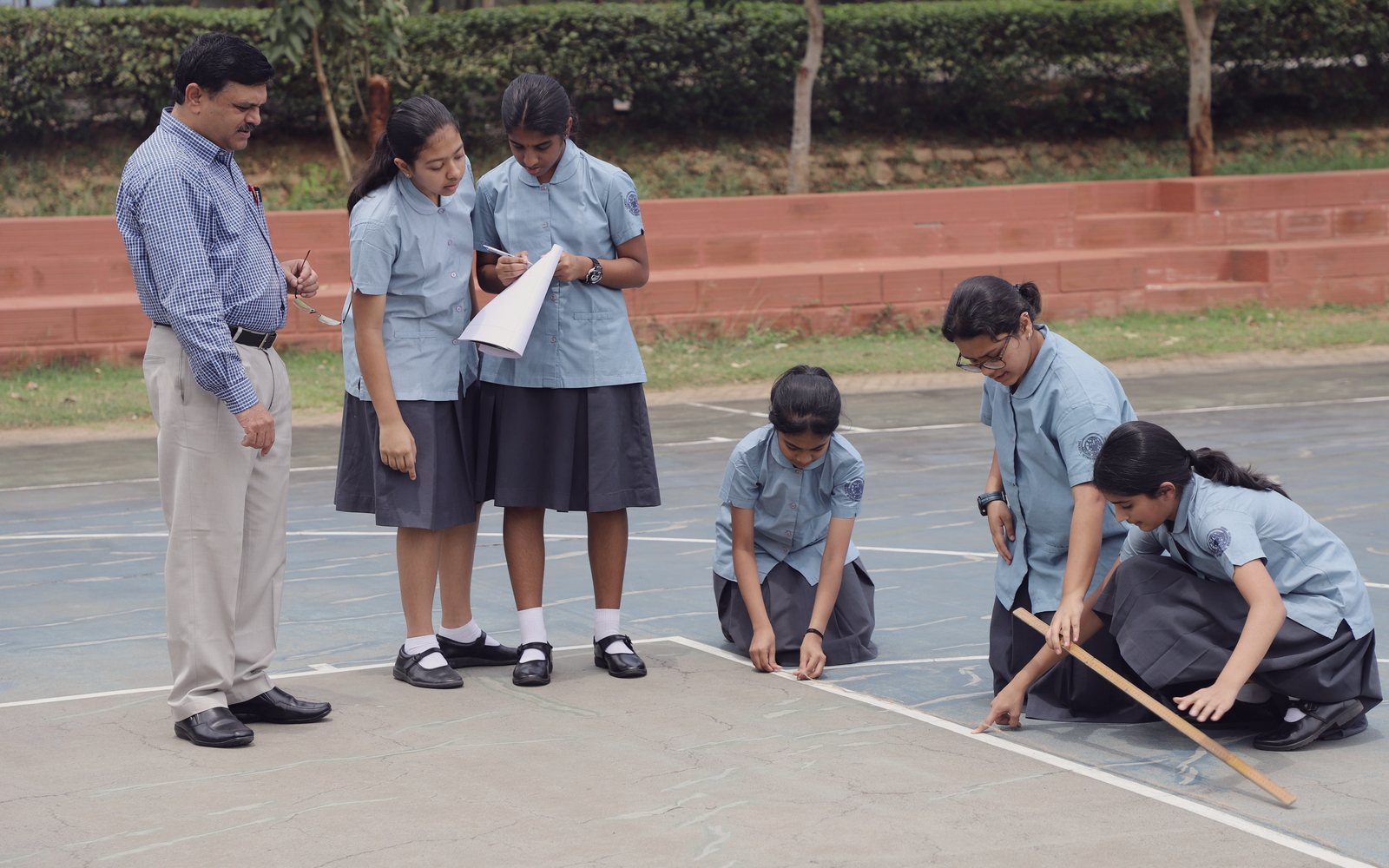
Students measuring out lines on an outdoor court with a long ruler while a teacher looks on
Measuring out lines on the court.
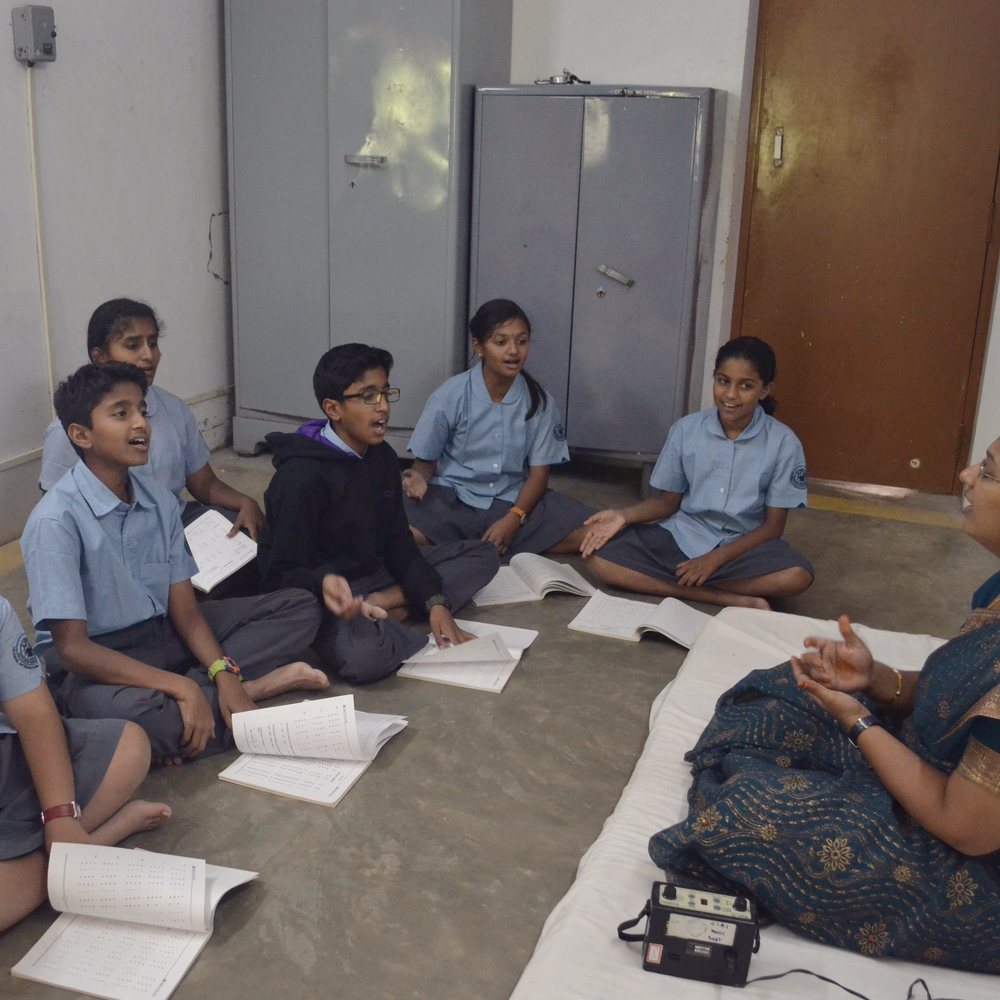
A small group of students seated on the floor with their teacher, books open in front of them
On the floor, books open.
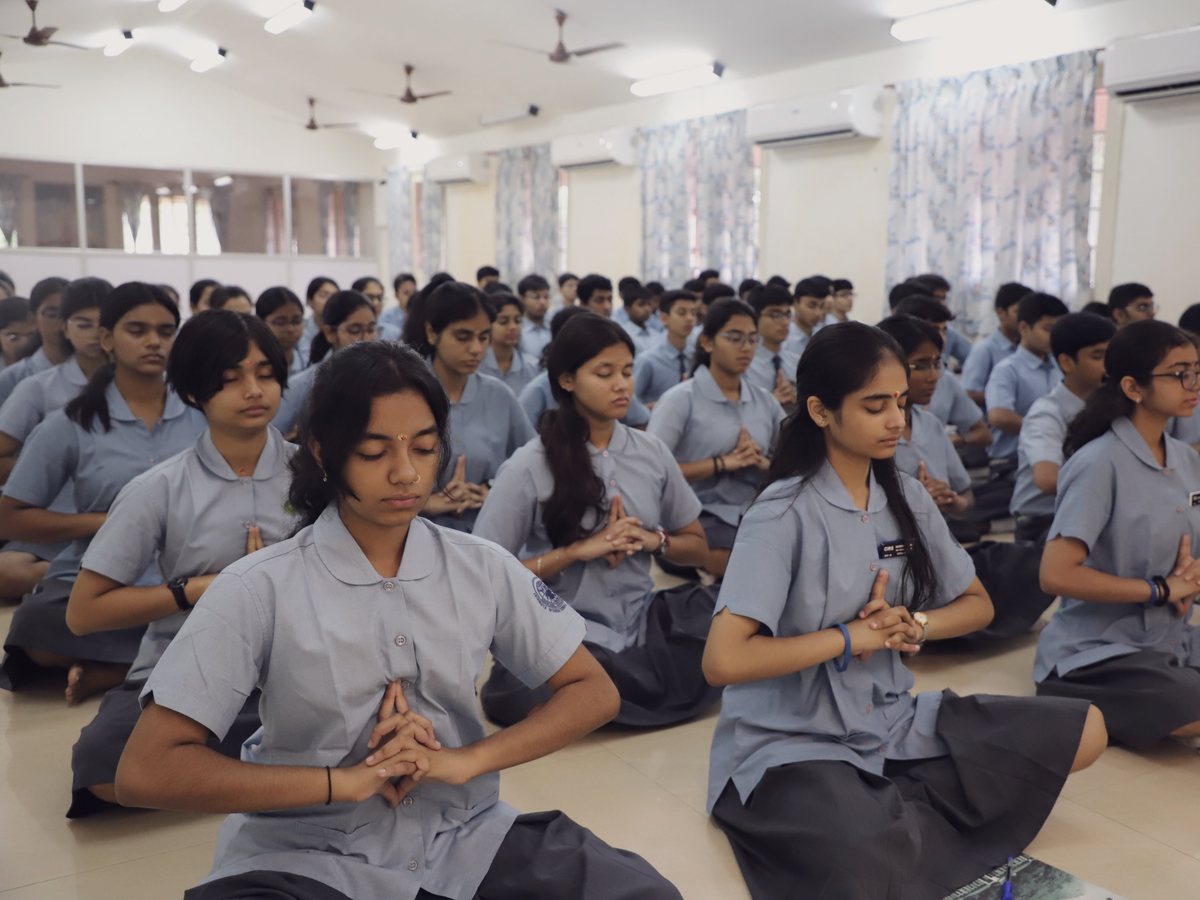
Students seated in rows in a hall, eyes closed and palms joined
In the hall, palms joined.